




Bringing an elderly parent home from hospital comes with mixed feelings. There is relief that the worst is over, and worry about managing without nurses around.
The good news is that most of this care can be learnt. Knowing how to care for an elderly person after hospital discharge comes down to a few things: asking the right questions before you leave, preparing the home, managing daily care and recognising the warning signs that need a doctor.
Every recovery is different, so always follow the discharge advice given by the treating doctor.
What Does Care After Hospital Discharge Involve?
It means helping an older person follow the doctor’s instructions at home while they regain strength. This usually includes giving medicines on time, helping with walking, bathing and toileting, preparing the right food, keeping review appointments and watching for signs of worsening.
Older adults often come home weaker than before. Even a few days in a hospital bed can affect balance, appetite, sleep and memory.
What to Ask Before You Leave the Hospital
Discharge day is often rushed. Before you leave, make sure you understand:
- The full medicine list, including new medicines and old ones that were stopped or changed
- Diet advice, such as limits on salt, sugar or fluids
- How active they can be, including stairs, bathing and walking without support
- Wound or catheter care, if they have a dressing or urinary catheter
- The next doctor visit and any tests needed before it
- Who to call if you have a doubt, especially at night
Keep the discharge summary, prescriptions and reports in one file. MedlinePlus explains what a discharge plan should include.
How to Prepare the Home Before They Arrive
- Set up their bed close to a bathroom, preferably on the ground floor if stairs are difficult
- Clear loose rugs, wires and clutter from the path to the toilet
- Add a night lamp and keep water, spectacles and a phone within reach
- Arrange any equipment the doctor suggested, such as a walker, commode chair or bed rail
How to Care for an Elderly Person at Home After Discharge
Give medicines exactly as prescribed
Medicine mistakes are common because the list often changes after a hospital stay. Put away old strips from before the admission unless the doctor has said to continue them. A written chart with each medicine’s name, dose and time, along with a weekly pill box, works well. Do not stop, skip or double a dose without asking the doctor. The National Institute on Aging shares practical tips on taking medicines safely in older age.
Help them move, but prevent falls
Staying in bed all day weakens muscles, but moving too quickly can lead to a fall. Encourage short, supported walks as the doctor advises, and ask them to sit on the edge of the bed for a minute before standing.
Footwear with a good grip and a helping hand in the bathroom make a real difference. If exercises are advised, physiotherapy at home can help rebuild strength without travelling. MedlinePlus also has useful advice on preventing falls at home.
Pay attention to food, water and toilet habits
Appetite is often low after an illness. Offer small, soft meals more often and follow any diet restrictions in the discharge summary. Unless fluids have been limited, encourage water through the day.
Keep an eye on urine and bowel movements, as constipation and dehydration are both common. For conditions like diabetes or kidney disease, a dietician consultation can help you plan suitable meals.
Protect the skin if they spend long hours in bed
Staying in one position for too long can cause bedsores over the hips, lower back, heels and shoulder blades. Help them change position every one to two hours, keep the bedsheet dry and free of folds, and check the skin daily for red or dark patches that do not fade when pressed. The NHS explains the early signs of pressure ulcers.
Watch their mood, sleep and memory
Some older people become confused, restless or unusually sleepy after a hospital stay. A well lit room during the day and a regular routine help them settle.
Sudden confusion should never be dismissed as old age. The NHS advises getting medical help quickly if someone suddenly becomes confused.
Warning Signs After Hospital Discharge That Need a Doctor
Contact the treating doctor promptly if you notice:
- Fever, or a wound that becomes red, swollen or starts leaking
- Breathlessness that is worse than at discharge
- New confusion or difficulty waking them
- Very little urine, or vomiting that stops them keeping fluids down
- A fall, even if they say they feel fine
For chest pain, severe breathlessness, fainting, heavy bleeding or sudden weakness on one side of the body, call an ambulance (108 in Maharashtra) or go to the nearest emergency department straight away.
Do You Need a Home Nurse or Caregiver After Discharge?
Many families manage on their own. Extra help is worth considering when the patient needs dressing changes, injections or catheter care, or cannot use the toilet without support. It also helps when family members work long hours or live in another city.
A trained home nurse handles medical tasks, while an elder care companion helps with bathing, meals and company. If the hospital stay was for an operation, our guide on home nursing after surgery for senior citizens may also help.
And look after yourself too. Sharing duties within the family helps prevent burnout.
Frequently Asked Questions
1. What should I do when my elderly parent comes home from hospital?
Read the discharge summary carefully, arrange the new medicines in a simple chart and set up a safe resting area near the bathroom. Note the next doctor visit. For the first few days, keep someone with them, especially during bathroom visits and at night.
2. How long does it take an elderly person to recover after a hospital stay?
There is no fixed timeline. Recovery depends on the illness, the length of the stay, other health conditions and how active the person was before admission. Some feel better within weeks, while others need a few months. The treating doctor can guide you.
3. What are the danger signs after hospital discharge in older adults?
Watch for fever, worsening breathlessness, sudden confusion, very little urine, an infected looking wound, repeated vomiting or any fall, and inform the doctor promptly. Chest pain, fainting or sudden weakness on one side of the body needs emergency care immediately.
4. Is it normal for elderly people to be confused after a hospital stay?
Tiredness and poor sleep are common, but sudden confusion is not something to ignore. It can be a sign of delirium, which may be triggered by an infection, dehydration or a reaction to medicines. Inform the doctor quickly if your parent seems much more confused than usual.
5. When should we arrange a home nurse after discharge?
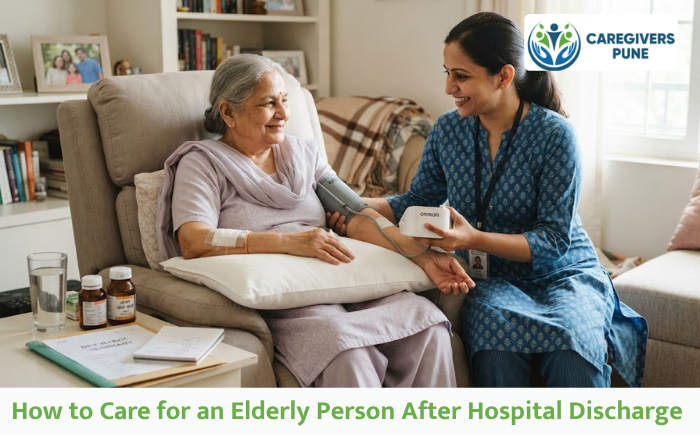
A home nurse can help when the patient needs dressing changes, injections, catheter care or regular checks of blood pressure and sugar. It also helps when no family member can be present through the day. Discuss your parent’s needs with the treating doctor before deciding.
Support at Home After Hospital Discharge
CareGivers provides home nursing, elder care companions, physiotherapy, doctor consultations and lab tests at home for families in Kharadi, Wagholi, Hadapsar and nearby parts of Pune. Every caregiver goes through profile screening, interviews and a trial deployment before being placed at a client’s home, and an elder care specialist prepares a care plan after understanding your parent’s needs.
Have questions? We’re just a message away! Contact us on WhatsApp: Click Here to Chat with Us
Name – Elderly Care Nursing service | Home Healthcare & Parental Care Service | Care Givers Pune
Address: Basement floor, Inamdar Hospital, B-105, Fatima Nagar, Wanowrie, Pune, Maharashtra 411040
Phone: 99887 97948
