



Watching an elderly parent come home after surgery can feel overwhelming. You want them to heal well, but you’re not sure how to manage wound care, medications, or daily activities safely. This is where home nursing after surgery becomes a practical solution for thousands of families every year.
This guide walks you through everything you need to know about post-operative care for elderly patients at home, including when it’s needed, what services are involved, and how to choose the right support system.
What Is Home Nursing After Surgery?
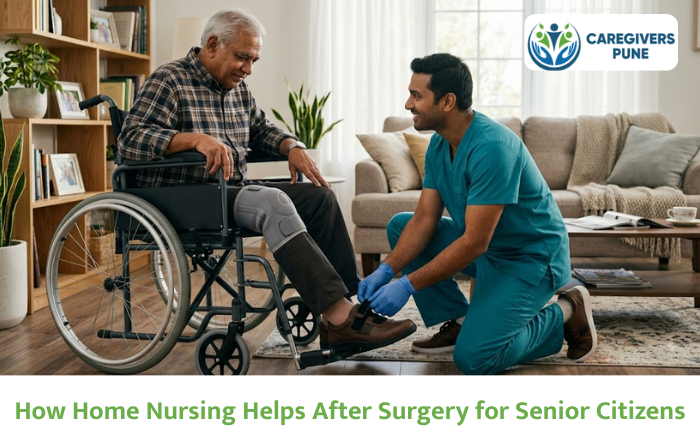
Home nursing after surgery refers to professional medical care delivered at a patient’s residence following an operation. Trained nurses or caregivers assist with wound dressing, medication management, mobility support, and monitoring for complications.
Unlike general caregiving, home nursing involves clinically trained staff who understand post-surgical protocols. This makes it especially valuable for elderly recovery at home, where the risk of complications is higher.
Quick answer: Home nursing is a healthcare service where qualified nurses provide medical support at home, helping patients recover safely without frequent hospital visits.
Why Senior Citizens Need Additional Care After Surgery
Aging bodies don’t bounce back the way younger ones do. Healing takes longer, immune response slows down, and the chances of infection or falls increase significantly.
Several factors make elderly patients more vulnerable after an operation:
- Slower tissue and wound healing
- Weaker immune systems
- Higher risk of blood clots and infections
- Reduced balance, increasing fall risk
- Multiple existing conditions like diabetes or heart disease
- Confusion or memory issues triggered by anesthesia
A senior citizen recovering from hip replacement surgery, for example, may struggle to walk to the bathroom safely without help. That single unsupervised trip could lead to a fall and a second hospital admission.
Benefits of Home Nursing for Elderly Patients
Home healthcare services offer more than convenience. They directly influence recovery speed and safety.
- Personalized attention — One-on-one care instead of shared hospital staff time.
- Lower infection risk — Hospitals carry higher exposure to infections compared to a controlled home environment.
- Emotional comfort — Familiar surroundings often reduce stress and confusion in elderly patients.
- Cost efficiency — Extended hospital stays are usually more expensive than home care alternatives.
- Family involvement — Relatives can stay closely connected to the recovery process.
- Reduced readmission risk — Trained supervision helps catch warning signs early.
Common Surgeries Where Home Nursing Helps
Home nursing support is especially useful after these procedures:
- Hip or knee replacement surgery
- Cardiac surgeries, including bypass procedures
- Cataract or eye surgeries
- Spinal surgeries
- Abdominal or hernia operations
- Fracture and orthopedic surgeries
- Cancer-related surgical procedures
Each surgery type comes with its own recovery timeline and precautions, which is why professional guidance matters more than guesswork.
Services Provided by Home Nurses
Post-operative care for elderly patients typically includes a mix of medical and supportive tasks. Here’s what’s usually covered:
| Service | Purpose |
|---|---|
| Wound dressing and monitoring | Prevents infection, tracks healing progress |
| Medication management | Ensures correct dosage and timing |
| Vital signs monitoring | Tracks blood pressure, pulse, oxygen levels |
| Mobility assistance | Reduces fall risk during movement |
| Physiotherapy coordination | Supports faster mobility recovery |
| Nutrition support | Encourages proper diet for healing |
| Hygiene assistance | Bathing, grooming, toileting support |
| Emotional support | Reduces anxiety and isolation |
Role of Family Members During Recovery
Home nurses don’t replace family involvement; they support it. Families still play a central role by offering emotional reassurance, staying alert to mood changes, and communicating openly with the care team.
A simple daily check-in about pain levels or appetite can help nurses adjust care plans quickly. Family presence, combined with professional support, generally leads to a smoother recovery experience.
Signs That Professional Home Nursing Is Needed
Not every recovery requires round-the-clock nursing, but certain signs suggest it’s time to bring in professional help:
- Difficulty walking or standing without assistance
- Visible swelling, redness, or discharge near the surgical site
- Confusion or memory lapses after anesthesia
- Multiple medications requiring strict timing
- Living alone with no consistent caregiver nearby
- Doctor recommends supervised recovery
If two or more of these apply, arranging elderly recovery at home with skilled nursing support is a reasonable next step.
Tips for Faster and Safer Recovery at Home
- Follow the discharge instructions exactly as given by the surgeon.
- Keep the recovery area clean, well-lit, and free of tripping hazards.
- Maintain a consistent medication schedule using reminders or charts.
- Encourage light movement only as approved by the doctor.
- Watch for early warning signs like fever or unusual pain.
- Keep hydration and nutrition consistent to support healing.
- Schedule regular follow-up appointments and don’t skip them.
Common Mistakes to Avoid
- Skipping prescribed physiotherapy sessions
- Ignoring mild symptoms that later worsen
- Overexerting too early to “speed up” recovery
- Missing medication doses or mixing timings
- Leaving the patient alone for long stretches after major surgery
How to Choose a Reliable Home Nursing Service
Look for these qualities when selecting a provider:
- Verified nursing credentials and training
- Clear communication with family members
- Availability of 24/7 support
- Positive reviews or referrals
- Transparent pricing without hidden charges
- Experience handling elderly and post-surgical cases specifically
Home Nursing vs Hospital Stay: A Quick Comparison
| Factor | Home Nursing | Hospital Stay |
|---|---|---|
| Comfort | High, familiar environment | Lower, clinical setting |
| Infection risk | Generally lower | Higher due to shared spaces |
| Cost | Usually more economical | Typically higher for extended stays |
| Family involvement | Easier and continuous | Limited visiting hours |
| Personalized attention | One-on-one focus | Shared among multiple patients |
Key Takeaways
- Home nursing after surgery supports safer, more comfortable recovery for elderly patients.
- Seniors face higher risks of complications, making supervised care valuable.
- Services include wound care, medication management, mobility support, and monitoring.
- Family involvement alongside professional nursing improves recovery outcomes.
- Choosing a credentialed, experienced provider matters for safety and trust.
Need Trusted Home Nursing Support After Surgery? CareGivers Pune Is Here to Help
Recovering from surgery at an older age comes with real challenges, but the right support system makes a significant difference. Whether it’s wound care, mobility assistance, or simply having a trained professional nearby, home nursing helps bridge the gap between hospital discharge and full recovery.
If your elderly family member is recovering after surgery and needs professional assistance at home, CareGivers Pune offers 24/7 home nursing services across Fatima Nagar, Wanowrie, Undri, NIBM, Kharadi, and Hadapsar. With over 10 years of experience, their trained caregivers help families manage post-operative care with greater confidence and peace of mind.
Frequently Asked Questions
1. What is home nursing after surgery?
Home nursing after surgery is professional medical care provided at home by trained nurses. It includes wound care, medication management, and monitoring to support safe recovery without needing an extended hospital stay.
2. How long is home nursing usually required after surgery?
Duration depends on the surgery type and individual health. Minor procedures may need care for a week or two, while major surgeries like hip replacements can require several weeks of support.
3. Is home nursing safer than hospital recovery for seniors?
Home nursing often reduces infection exposure and offers personalized attention. However, safety depends on the patient’s condition, so a doctor’s recommendation should guide this decision.
4. What services do home nurses provide after surgery?
Home nurses typically handle wound dressing, medication schedules, vital sign monitoring, mobility assistance, hygiene support, and coordination with physiotherapists or doctors as needed.
Have questions? We’re just a message away! Contact us on WhatsApp — Click Here to Chat with Us
Name – Elderly Care Nursing service | Dementia Care | Home Healthcare & Parental Care Service | Care Givers Pune
Address: Basement floor, Inamdar Hospital, B-105, Fatima Nagar, Wanowrie, Pune, Maharashtra 411040
Phone: 99887 97948
